Key Takeaways
- Underlayment is the single most impactful variable a homeowner can control for reducing impact noise (footsteps, dropped objects) between floors. The floor covering material contributes far less to sound reduction than the underlayment beneath it.
- Two separate ratings govern underlayment performance: IIC (Impact Insulation Class) addresses footstep and impact noise traveling through the floor structure, while STC (Sound Transmission Class) addresses airborne noise such as voices and music. A strong IIC score matters most in multi-story homes.
- Aurora's climate creates a moisture consideration that affects underlayment selection: concrete subfloors in homes with basements or slab construction require an integrated or separately installed vapor barrier before any underlayment goes down, regardless of the sound-rating goal.
- Thicker is not automatically better. A 10mm felt pad does not perform equally to a 6mm acoustic rubber membrane. Density, material composition, and IIC rating together determine real-world performance, not thickness alone.
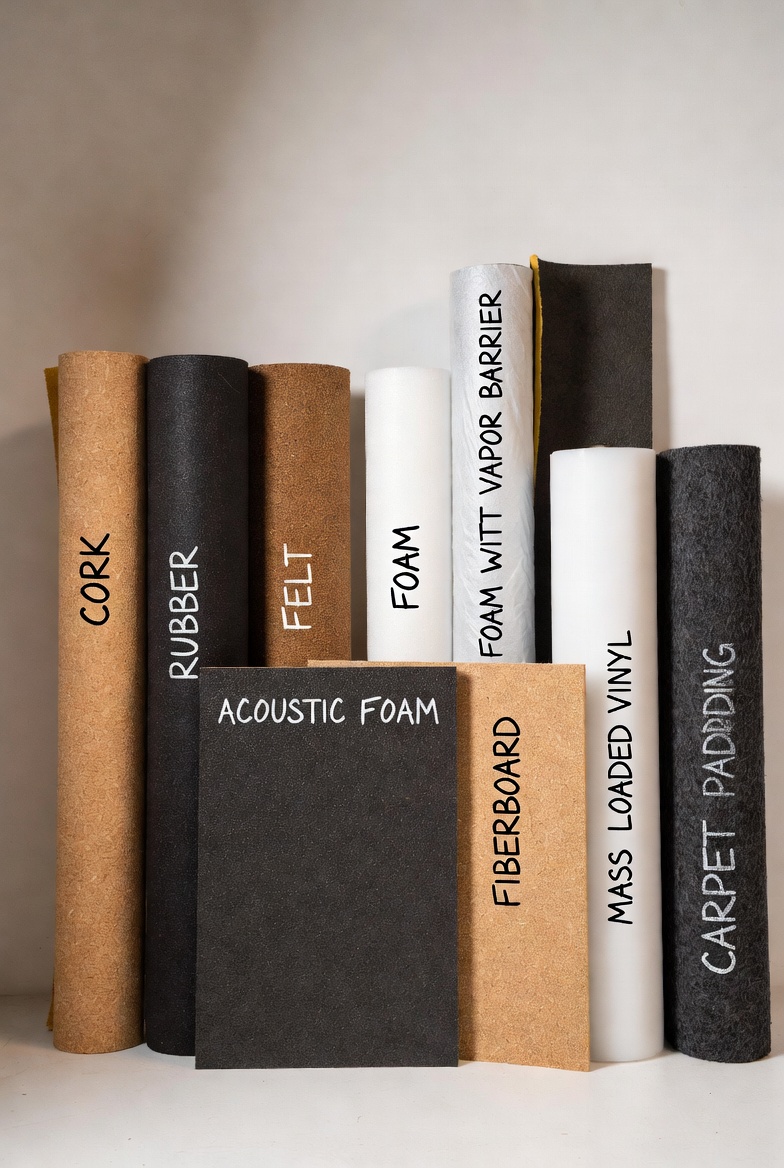
Why does sound travel so easily between floors in suburban homes, and what role does underlayment play?
Most single-family homes built in the Aurora area between the 1970s and early 2000s use wood-framed floor and ceiling assemblies: dimensional lumber joists, a plywood or OSB subfloor on top, and a drywall ceiling below. That assembly transmits sound in two distinct ways, and understanding the difference is the starting point for making a useful underlayment decision.
The first type is impact noise, the technical term is structure-borne sound. This is the thud of a footstep, the impact of a child jumping, a dropped book, or a chair being dragged. The energy from the impact travels directly into the floor structure and radiates from the ceiling below as a low rumble. Impact noise is the dominant complaint in two-story homes and the primary reason underlayment matters.
The second type is airborne noise: voices, television audio, music, or a barking dog. Airborne sound travels through the air and is transmitted when it causes a surface to vibrate. Airborne noise between floors is harder to address with underlayment alone because it also travels through walls, ductwork, and gaps around fixtures.
Underlayment works by decoupling the hard floor surface from the structural subfloor. When a foot lands on a hard floor with no underlayment, the impact energy goes directly into the subfloor and joist system. When a resilient underlayment layer sits between the floor and the subfloor, it absorbs and dissipates some of that impact energy before it enters the structure. The amount it absorbs is what the IIC rating quantifies.
What do IIC and STC ratings actually mean, and what numbers should a homeowner target?
IIC stands for Impact Insulation Class. It is measured in a laboratory by dropping a standardized tapping machine on the floor assembly and measuring how much sound is transmitted to the room below. Higher numbers mean less transmitted noise. The scale runs roughly from the low 40s (poor) to the mid-70s (very good) for residential assemblies.
STC stands for Sound Transmission Class. It measures how much a building assembly reduces airborne sound. An STC of 40 means a loud speech is audible but not intelligible from the floor below. An STC of 50 means loud speech is faint or inaudible. STC ratings above 55 are considered good for residential use.
For a multi-story home where footstep noise is the primary concern, the IIC rating of the combined assembly, meaning the subfloor, underlayment, and floor covering together, is the number that matters most. A bare plywood subfloor with a standard wood floor and no underlayment typically achieves an IIC around 25 to 35. Building codes in Illinois require a minimum IIC of 50 for floor-ceiling assemblies in multi-family construction. Single-family homes have no legal minimum, but targeting an IIC of 60 or above is a reasonable goal for noticeably quieter results.
An important clarification: manufacturer IIC ratings are measured in lab conditions with a specific assembly. Real-world performance in an older home with gaps around pipes, unsealed electrical boxes, and varying joist depth will be somewhat lower than the lab number. An underlayment rated IIC 65 may deliver real-world performance closer to IIC 58 to 62. That gap is normal, not deceptive, but it should inform expectations.
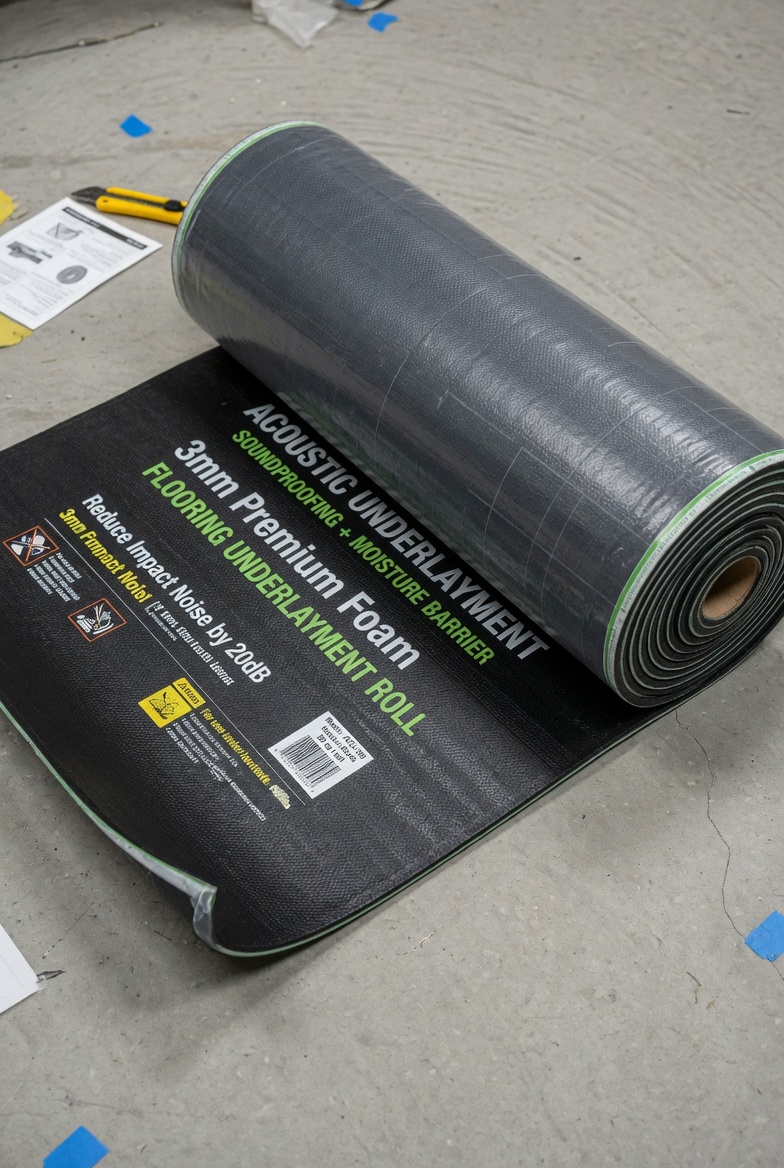
What are the main underlayment material types, and how do they compare for sound reduction?
Five material categories cover most of what is available to homeowners installing hard flooring in a multi-story home. Each has a different performance profile, cost range, and installation consideration.
Foam underlayment is the most common and least expensive option. Standard polyethylene foam at 2 to 3mm provides basic cushion and minimal sound reduction. It is adequate for ground-floor or single-story installations but insufficient as a primary sound-control strategy between occupied floors. Upgraded foam products with higher density and integrated vapor barriers perform better than basic foam, but they remain at the lower end of the IIC range compared to denser materials.
Cork underlayment is a natural material with genuinely good acoustic properties for its thickness. Cork has an open-cell structure that absorbs vibration efficiently, and 3 to 6mm cork underlayment delivers IIC ratings in the 55 to 62 range, which is a meaningful step up from foam at a moderate cost increase. Cork also provides slight thermal insulation and is a renewable material. Its limitation is that it compresses slightly over time under heavy point loads, such as heavy furniture legs, and provides no moisture protection on its own.
Rubber underlayment (including recycled rubber products) is one of the stronger performers for impact sound reduction. Recycled rubber at 3 to 6mm achieves IIC ratings in the 58 to 65 range. It is dense, durable, and resists compression under load better than foam or cork. Rubber underlayment is also more moisture-tolerant than felt products. The trade-off is weight and cost: rubber underlayment is physically heavier and harder to handle during installation, typically costs more per square foot than foam or cork.
Felt or fiber underlayment uses dense recycled fibers compressed into a rigid pad. Felt underlayment performs well under engineered and solid hardwood specifically because it provides a firmer, more stable surface than foam, which flooring manufacturers sometimes require to maintain warranty compliance. IIC ratings for quality felt products run in the 54 to 60 range. Felt does not provide moisture protection and should not be used directly over concrete without a vapor barrier layer.
Composite and acoustic membrane products represent the upper tier. These are engineered underlayments that layer rubber, foam, and sometimes a damping compound to achieve IIC ratings of 65 and above. Products such as mass-loaded vinyl (MLV) used in combination with foam or rubber, or specialty acoustic membranes designed for commercial applications, can bring IIC into the 68 to 72 range in lab conditions. These products are more expensive and sometimes thicker than standard underlayments, which affects door clearance and transition strip height in a renovation context.
How do the main underlayment options compare across the metrics that matter most?
The table below summarizes the seven most common underlayment categories available to Aurora-area homeowners for hard flooring in multi-story applications. IIC and STC ranges reflect published laboratory data for quality mid-range products in each category; entry-level versions of each type will perform toward the lower end of the stated range.
| Type | IIC | STC | Best Match | Moisture Barrier |
|---|---|---|---|---|
|
Foam (basic, 2-3mm) |
48-52 |
46-50 |
LVP, laminate (low-noise rooms) |
None built-in |
|
Foam with vapor barrier (3-6mm) |
50-54 |
48-52 |
LVP, laminate over concrete |
Yes |
|
Cork (3-6mm) |
55-62 |
52-58 |
Engineered hardwood, LVP, laminate |
Partial |
|
Rubber (3-6mm recycled) |
58-65 |
54-60 |
Hardwood, engineered hardwood, tile |
Partial |
|
Felt/fiber (3-8mm) |
54-60 |
50-56 |
Engineered hardwood, solid hardwood |
None built-in |
|
Composite (rubber with foam) |
60-68 |
56-62 |
LVP, engineered hardwood, laminate |
Often included |
|
Acoustic membrane (specialty) |
65-72 |
60-66 |
All hard flooring types |
Yes (most products) |
Note: IIC and STC values are laboratory measurements for the underlayment layer within a standard test assembly. Actual performance in an existing home depends on the full floor-ceiling assembly, subfloor condition, joist spacing, and any flanking paths such as walls and mechanical penetrations.
How does the subfloor type and condition affect underlayment selection?
The subfloor is the surface the underlayment sits on, and its condition and material type constrain the underlayment options available.
Plywood or OSB subfloor is the most common situation in Aurora-area wood-framed homes. A structurally sound plywood subfloor in good condition is compatible with all underlayment types. Before any underlayment goes down, the subfloor should be flat to within 3/16 of an inch over 10 feet, with all squeaky areas secured with screws and any high spots sanded or planed. An unlevel subfloor causes floating floor installations to flex at the joints, which creates noise of its own and can eventually damage locking systems regardless of how good the underlayment is.
Concrete subfloor (common in slab-on-grade construction and basement-level rooms) requires a vapor barrier before any underlayment that is not moisture-resistant goes down. Concrete passes moisture vapor upward constantly, even in a dry-feeling basement. Felt and basic foam underlayments will absorb that moisture and degrade, and the flooring above can swell or buckle. Cork, rubber, and composite products offer better moisture tolerance, but a dedicated 6-mil polyethylene vapor barrier under any underlayment on concrete is considered good practice for an Illinois home regardless of the underlayment's own moisture rating.
Existing resilient flooring (old sheet vinyl or VCT tile left in place) changes the calculation. If the existing surface is smooth, flat, and well-adhered, some underlayment products can go directly over it. However, adding layers raises the floor height, which affects door clearances and transition strips. Each additional layer of underlayment, even a 3mm product, may require trimming door bottoms and replacing transition strips at doorways and between rooms.
Does the flooring type above the underlayment affect which product to choose?
Yes, and this is one of the more common mismatches that leads to installation problems or voided warranties.
Luxury vinyl plank (LVP) often comes with a factory-attached underlayment pad already bonded to the back of each plank. If that is the case, adding a separate underlayment beneath it creates a double-cushion situation. Too much give underfoot causes the locking joints to flex and stress with each step, which can lead to joint failure over time. If the LVP product has an attached pad, the only separate underlayment appropriate is a thin vapor barrier sheet, not an additional cushion layer. Check the manufacturer's installation guide before adding any underlayment beneath a pad-attached LVP product.
Laminate flooring is similar to LVP in this respect. Many laminate products also include an attached underlayment. Where separate underlayment is used with laminate, the manufacturer's maximum total underlayment thickness is usually specified in the warranty documentation. Exceeding that thickness, typically 3 to 4mm for most laminate products, risks joint flex and warranty voiding.
Engineered hardwood is generally compatible with the full range of underlayment thicknesses, and the firmer materials such as felt or rubber tend to be preferred by engineered hardwood manufacturers because they provide a more stable base than soft foam. Many engineered hardwood warranties specify a minimum underlayment density rather than a maximum thickness.
Solid hardwood installed by nail-down or staple method does not use underlayment in the conventional sense; a rosin paper or moisture-resistant building paper is used instead as a vapor control layer. The acoustic performance of a nail-down solid hardwood floor is determined largely by the floor assembly design rather than an underlayment product.
What specific steps should a homeowner follow when selecting underlayment for a multi-story room in Aurora?
A structured selection process for this region and home type:
- Identify the subfloor material (plywood, OSB, concrete) and check moisture levels with a calibrated moisture meter before choosing any underlayment. In the Aurora area, spring and post-snowmelt moisture readings in basement-level spaces are frequently higher than fall readings in the same room.
- Confirm whether the flooring product being installed has an attached underlayment pad. If yes, plan for a vapor barrier sheet only over concrete, or nothing additional over plywood. If no attached pad, proceed to select a separate underlayment.
- Set a target IIC rating based on the noise concern. For a bedroom above a living room where footstep noise is the issue, target IIC 60 or above. For a hallway above a rarely occupied space, IIC 52 to 58 may be sufficient. Higher targets require denser, often thicker materials.
- Check the flooring manufacturer's underlayment specifications in the warranty documentation. Note the maximum allowable thickness and any density or material-type requirements. These specifications are binding for warranty purposes.
- Factor in moisture: concrete subfloor always requires a vapor barrier. Plywood subfloor in a basement or lower level with any history of humidity or water intrusion should also include a vapor barrier even though the subfloor is wood-based.
- Measure door clearances before finalizing underlayment thickness. Adding a 6mm underlayment to an existing floor raises the finished surface by 6mm plus the flooring thickness. If the door currently has minimal clearance, this matters before the installation begins rather than after.
- Request samples of two or three candidate underlayment products from the showroom before committing. Walking on samples layered under flooring material in a showroom setting gives a realistic sense of underfoot feel and audible sound difference between options.
Are there common mistakes Aurora homeowners make when choosing underlayment for sound reduction?
Several patterns come up repeatedly when underlayment is chosen without the full picture in view.
- Choosing underlayment by thickness alone. A 10mm foam pad feels noticeably cushioned underfoot but delivers IIC performance in the low 50s. A 3mm dense rubber membrane can outperform it by 10 to 15 IIC points in the same assembly. Thickness and density together determine performance; thickness alone does not.
- Installing a second underlayment beneath a pad-attached LVP product. This is one of the more common installation errors. The combined cushion creates excessive flex at the locking joints, which generates clicking sounds with each step and eventually causes joint separation. The noise problem the homeowner was trying to solve becomes worse, not better.
- Skipping the moisture test on concrete. An Aurora basement that feels and smells dry in September may read elevated moisture vapor emission in May after snowmelt has raised the water table. A reading taken in one season is not necessarily valid for the next.
- Misreading the IIC target. Some homeowners see an underlayment rated IIC 70 and expect near-total sound elimination. IIC 70 in a real home still allows footsteps to be heard below; it reduces the volume and changes the character of the sound rather than eliminating it. Managing expectations around what underlayment can and cannot do prevents disappointment after installation.
- Not accounting for door clearance and transitions until after the floor is installed. A room that gains 10mm of total floor height from new flooring and underlayment may require every door to be trimmed and every transition strip to be replaced. These are manageable tasks planned in advance, but they are disruptive surprises discovered after the floor is down.
- Using a vapor barrier but no underlayment, or underlayment but no vapor barrier over concrete. Both layers serve different functions and neither substitutes for the other. A vapor barrier controls moisture; underlayment controls sound. In a basement-level installation over concrete, both are warranted.
How does the age and construction style of a home affect what is realistically achievable with underlayment?
Underlayment works within the constraints of the existing floor-ceiling assembly. In a home built before 1990, where joist bays may not be insulated and where ceiling drywall may be only a single 1/2-inch layer, the floor assembly itself has limited baseline performance. Adding a quality underlayment improves the result, but the improvement happens within a context.
Homes built with engineered floor trusses (common in Aurora-area construction from the late 1990s onward) have deeper joist bays and often better inherent assembly performance than older dimensional-lumber-framed floors. The added cavity depth allows for batt insulation between floors, which addresses airborne noise even though it does not significantly affect impact noise. A home that combines floor insulation in the joist bays with a quality acoustic underlayment and a hard floor covering achieves meaningfully better combined performance than either measure alone.
For older homes where the ceiling below cannot be opened and the joist bays are inaccessible, underlayment is the primary available lever. In those situations, choosing the highest-performing underlayment compatible with the flooring product and subfloor conditions gives the best achievable result without a full assembly renovation.
In two-story homes where the staircase is the primary sound path, it is worth noting that underlayment only addresses the horizontal floor surface. Stair treads, which are often uncarpeted in renovation projects, are a separate sound-transmission path that underlayment cannot address. Hard-surface stair treads with no sound-dampening treatment are one of the most common noise complaints in multi-story homes, and they are worth addressing separately from the main floor installation.
Talk Through Your Specific Room at the Creative Floors INC Showroom in Aurora
Underlayment selection gets easier when the conversation includes the actual room: what floor covering is going in, what is below the room in question, what the subfloor is made of, and what the noise concern actually sounds like. Those details change the recommendation significantly, and a general article can only take the conversation so far.
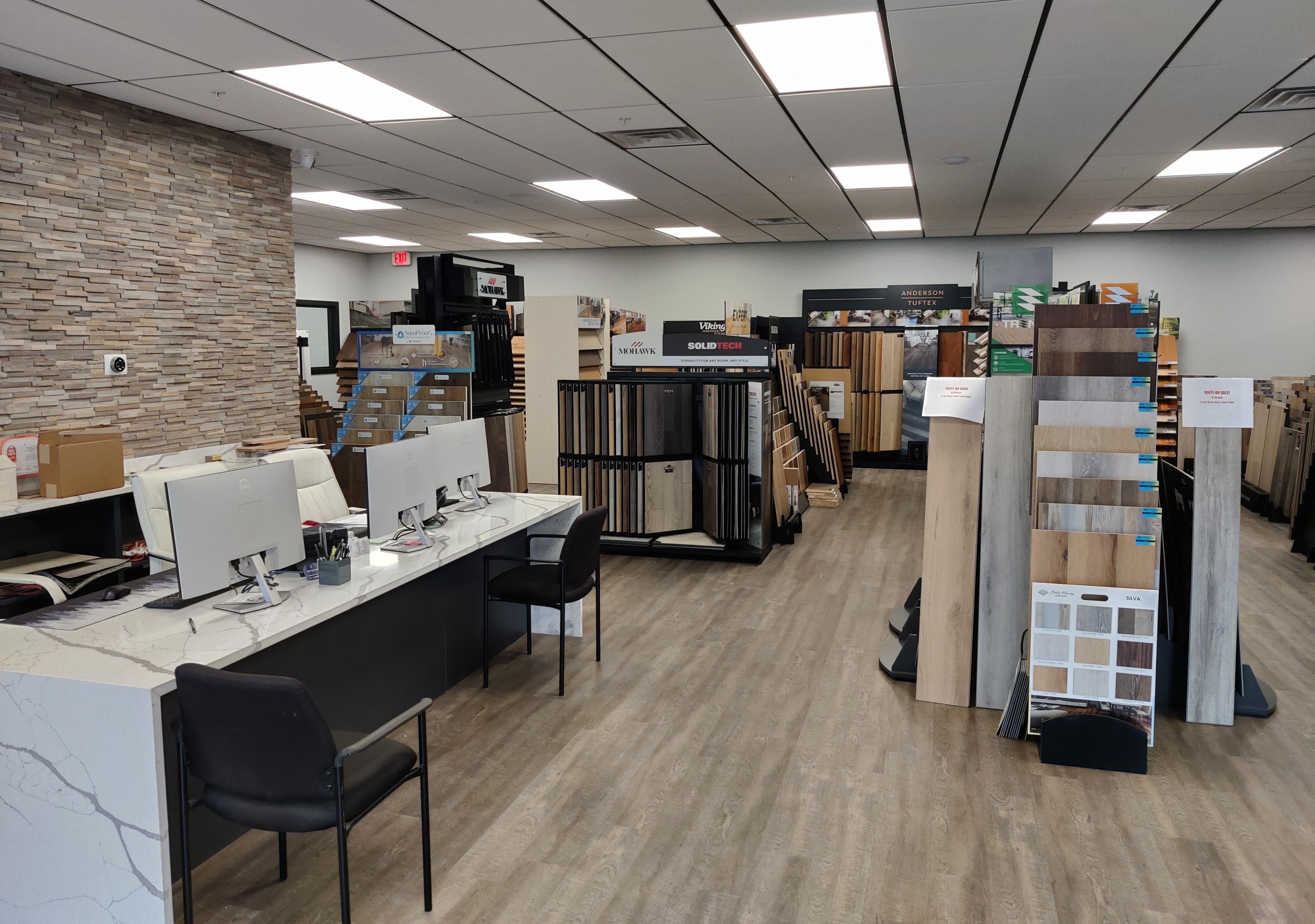
The Creative Floors INC showroom in Aurora carries a range of underlayment products across material types and IIC ratings, and the team there can walk you through how each option interacts with the specific flooring product you are considering. If you are working with an older home, a basement slab, or a manufacturer warranty that specifies underlayment requirements, those are exactly the kinds of details worth bringing into the conversation before anything is ordered.